
Hypertension (High Blood Pressure) in India: Causes, Symptoms, Diagnosis, Treatment, and Lifestyle Tips
Introduction
Hypertension, commonly called high blood pressure, is one of the most common health problems in India today. Many people are unaware that they have it because it often has no early warning signs. Over time, uncontrolled blood pressure can damage the heart, brain, kidneys, eyes, and blood vessels. The good news is that hypertension can be prevented, detected early, and managed well with the right care and lifestyle habits. In this guide, I explain hypertension in simple language so that you and your family can take practical steps to stay healthy.
What Is Blood Pressure?
Blood pressure is the force of blood pushing against the walls of your arteries. It is measured using two numbers:
• Systolic pressure (top number): pressure when the heart beats.
• Diastolic pressure (bottom number): pressure when the heart relaxes.
For example, if your reading is 120/80, it means the systolic pressure is 120 and the diastolic pressure is 80. A normal blood pressure for most healthy adults is approximately 120/80 mmHg.
What Is Hypertension?
Hypertension means your blood pressure is consistently higher than normal. Doctors usually diagnose hypertension when repeated readings are 140/90 mm Hg or more in a clinic, or 130/80 mm Hg or more at home or on ambulatory monitoring. Some people have “white coat hypertension,” where readings are higher in the doctor’s office due to stress, but normal at home. Others may have “masked hypertension,” where clinic readings are normal, but home readings are high. That is why regular, accurate measurement is important.
Why Hypertension Matters
If blood pressure stays high for a long time, it makes the heart work harder and damages blood vessels. This increases the risk of:
• Heart attack and heart failure
• Stroke
• Kidney disease
• Vision loss and eye problems
• Peripheral artery disease (poor blood flow to legs)
• Dementia and memory issues
Hypertension is a major cause of premature death and disability in India. Detecting it early and keeping it under control can add years of healthy life.
Common Causes and Risk Factors
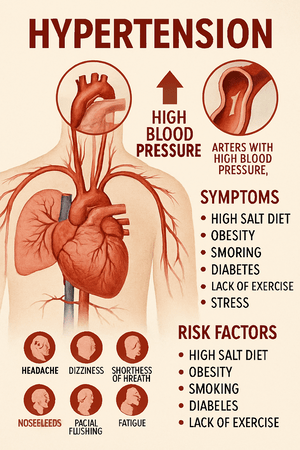
For most people, hypertension develops gradually due to a mix of genes and lifestyle. Some common risk factors include:
• Family history of high blood pressure
• Age above 35–40 years (risk increases with age)
• Overweight or obesity, especially around the waist
• Too much salt (sodium) in the diet
• Low intake of fruits, vegetables, and potassium-rich foods
• Lack of physical activity
• High stress levels and poor sleep
• Excess alcohol intake
• Tobacco use (smoking or smokeless)
• Certain medications (like painkillers such as NSAIDs, decongestants), and steroids
• Health conditions such as diabetes, kidney disease, thyroid problems, and sleep apnea
In some cases, hypertension is caused by an underlying medical problem (secondary hypertension). Treating the cause can improve blood pressure.
Symptoms: Often None
Hypertension is often called a “silent killer” because most people feel normal. Some may experience headaches, dizziness, blurred vision, shortness of breath, chest discomfort, or nosebleeds, but these are not reliable signs. Do not wait for symptoms—check your blood pressure regularly, especially if you are over 30 or have risk factors.
How Is Hypertension Diagnosed?
1) Blood pressure measurement
• A digital home monitor or a clinic device is used. Sit quietly for 5 minutes, feet flat on the floor, back supported, arm at heart level. Use a cuff that fits your arm.
• Take at least two readings, one minute apart, and record the values. Measure at the same time daily for a week to confirm.
• Home blood pressure targets are slightly lower than clinic targets.
2) Ambulatory blood pressure monitoring (ABPM)
• A portable device measures your blood pressure over 24 hours. This helps detect white-coat or masked hypertension and gives a complete picture.
3) Basic tests
• Blood tests: sugar (glucose or HbA1c), kidney function (creatinine), cholesterol (lipid profile), electrolytes (sodium, potassium).
• Urine test: to check for protein or kidney problems.
• ECG (electrocardiogram): to look for heart strain.
• Eye check (fundus exam) if advised by your doctor.
These tests help your doctor decide the best treatment plan and check for damage to organs.
Blood Pressure Categories (Adults)
• Normal: less than 120/80 mm Hg
• Elevated (prehypertension): 120–129/<80
• Hypertension Stage 1: 130–139/80–89 (home/ABPM) or 140–159/90–99 (clinic)
• Hypertension Stage 2: 140 or higher/90 or higher (home/ABPM) or 160 or higher/100 or higher (clinic)
• Hypertensive crisis: 180/120 or higher—seek urgent medical care
Your doctor may set slightly different targets if you are older, have diabetes, kidney disease, or other conditions.
Treatment: Lifestyle First, Medicines When Needed
The best approach combines healthy habits and, when needed, medications. Many people will need both.
1) Lifestyle changes (work for everyone)
• Reduce salt: Aim for less than one teaspoon (5 grams) of salt per day, including hidden salt in pickles, papads, namkeens, instant noodles, sauces, and restaurant food.
• Eat more fruits and vegetables: At least 4–5 servings daily. Include bananas, oranges, guava, tomatoes, spinach, gourds, and salads.
• Choose whole grains and pulses: Brown rice, millets (ragi, bajra, jowar), whole wheat, dals, and beans.
• Healthy proteins: Fish, eggs, dals, beans, soy, curd, paneer (in moderation), and nuts.
• Cut down on saturated and trans fats: Limit fried foods, bakery items, pakoras, chips, and vanaspati. Use oils like mustard, groundnut, sesame, or sunflower in small amounts.
• Keep a healthy weight: Even 5–10% weight loss helps reduce blood pressure.
• Be active: Aim for at least 150 minutes of moderate exercise each week (like brisk walking, cycling, swimming), plus strength training 2–3 days a week. Add daily movement—take stairs, walk short distances, and avoid long sitting.
• Limit alcohol: No more than 1 drink per day for women and 2 for men. Avoid binge drinking.
• Quit tobacco: Stopping smoking and smokeless tobacco lowers risk of heart attack and stroke.
• Manage stress and sleep: Practice deep breathing, yoga, meditation, or prayer. Aim for 7–8 hours of sleep. Keep a regular sleep schedule.
• Check your blood pressure at home: Keep a diary and share with your doctor.
2) Medicines (antihypertensives)
• If lifestyle changes are not enough or your blood pressure is high, your doctor may prescribe medicines. Common types include:
• Diuretics (water tablets)
• ACE inhibitors or ARBs
• Calcium channel blockers
• Beta blockers (in some cases)
• Many people need two or more medicines. Fixed-dose combination pills can make it easier to take them regularly.
• Take medicines exactly as prescribed. Do not stop on your own even if you feel fine. If you have side effects, talk to your doctor—there are many alternatives.
3) Targets
• For most adults: aim for less than 130/80 mm Hg at home, or as your doctor advises.
• For older adults or those with other illnesses, targets may be slightly higher to avoid dizziness and falls. Your doctor will individualize your plan.
Special Considerations in India
• Diet patterns: Indian diets can be high in salt due to pickles, chutneys, papads, and processed snacks. Try homemade versions with less salt and choose fresh foods.
• Cooking tips: Rinse canned foods, use spices and herbs (jeera, dhania, haldi, garlic, ginger, curry leaves) to enhance taste without adding salt.
• Festivals and eating out: Plan ahead. Share dishes, choose tandoori or grilled items, dal, salads, roti instead of puri or naan with butter, and ask for less salt.
• Heat and dehydration: In hot weather, dehydration can affect blood pressure and certain medicines. Drink enough water and discuss with your doctor during heatwaves.
• Traditional remedies: Some herbs may help general health, but do not replace prescribed medicines. Avoid self-medication. Always check with your doctor, especially if you take Ayurvedic or herbal supplements.
Monitoring at Home: Step-by-Step
• Buy a validated upper-arm digital BP monitor. Avoid wrist or finger devices.
• Sit comfortably, avoid tea/coffee, smoking, or exercise for 30 minutes before measuring.
• Rest for 5 minutes. Keep legs uncrossed, feet flat, and back supported.
• Place the cuff on bare upper arm, at heart level. Ensure proper cuff size.
• Take two readings, one minute apart, in the morning and evening for 3–7 days when diagnosing. For routine tracking, measure a few times a week.
• Record readings with date and time. Bring the log to your doctor visits.
When to Seek Urgent Help
Go to the nearest hospital if you have:
• Blood pressure 180/120 mm Hg or higher
• Severe headache, confusion, vision loss
• Chest pain, shortness of breath, or fainting
• Weakness or numbness on one side of the body, difficulty speaking (possible stroke)
Do not try to treat a hypertensive crisis at home.
Hypertension in Special Groups
• Pregnancy: High blood pressure during pregnancy can be dangerous for mother and baby. Regular antenatal check-ups are essential. Do not take blood pressure medicines without medical advice.
• Diabetes and kidney disease: Tighter control is often needed. Regular tests for kidney function and urine protein are important.
• Young adults: If you are under 30 with high BP, your doctor may look for secondary causes like kidney or hormonal issues.
• Older adults: Be careful with standing up quickly to avoid dizziness. Check sitting and standing blood pressure.
Frequently Asked Questions
• Can I feel when my blood pressure is high? Usually no. Measuring is the only way to know.
• Is hypertension curable? It can often be controlled very well. Some people can reduce medicines with lifestyle changes, but long-term monitoring is necessary.
• Are home monitors accurate? Good-quality, validated devices are accurate when used correctly.
• Can stress alone cause hypertension? Stress can raise blood pressure temporarily and contribute over time, but diet, weight, and genetics also play big roles.
• Is sea salt or rock salt better? All salts contain sodium and raise blood pressure. The key is to reduce total salt, not switch types.
Simple Daily Plan
• Breakfast: Poha/upma with vegetables, or oats with curd and fruit; avoid extra salt.
• Lunch: Roti or millet bhakri, dal/rajma/chana, sabzi, salad, curd; limit pickles and papad.
• Snacks: Fruit, sprouts chaat without extra salt, roasted chana, unsalted nuts.
• Dinner: Brown rice or roti, fish/chicken (grilled) or paneer/tofu, mixed vegetable curry, salad.
• Movement: 30–45 minutes brisk walk most days, plus light strength exercises.
• Relaxation: 10 minutes of breathing exercises or meditation before bed.
Key Takeaways
• Check your blood pressure regularly, even if you feel fine.
• Eat less salt, move more, maintain a healthy weight, avoid tobacco, and limit alcohol.
• Take medicines as prescribed and follow up with your doctor.
• Small, consistent changes can protect your heart, brain, and kidneys for life.
If you or a family member has high blood pressure, do not worry—start today with one positive change. Over time, these steps make a big difference in your health and well-being.